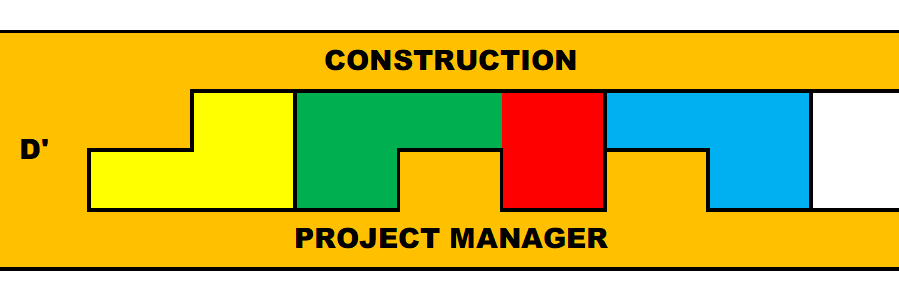
In construction procurement, the way contracts are structured can dramatically change who carries responsibility, who manages coordination, and where risks sit. A common source of confusion arises when comparing a Main Contractor role emerging from Multiple Prime Contracts versus a General Contractor (GenCon) Strategy.
At first glance, both seem to involve a “lead builder,” but in reality, they operate very differently in authority, accountability, and project control.
Main Contractor in a Multiple Prime Contract Setup
In a Multiple Prime Contract arrangement, the owner directly hires several prime contractors—such as:
- Civil works contractor
- Structural contractor
- MEP (mechanical, electrical, plumbing) contractor
- Finishes contractor
There is no single contractual main contractor responsible for the entire construction. However, in practice, one contractor (often the civil or structural contractor) may function informally as a “main contractor” due to site presence and sequencing influence.
Key Characteristics:
- The owner holds multiple contracts with different prime contractors.
- Coordination responsibility often falls on the owner, consultant, or construction manager.
- A “main contractor” may emerge operationally, but not contractually.
- Each prime contractor is independently liable for their scope.
Implications:
- Faster procurement (packages can start at different times).
- Greater control by the owner.
- Higher coordination risk due to fragmented responsibilities.
- Potential for interface conflicts between contractors.
GenCon (General Contractor) Strategy
Under the GenCon Strategy, the owner appoints a single General Contractor who holds one main contract and takes full responsibility for delivering the project.
Key Characteristics:
- The GenCon is contractually responsible for all construction works.
- Subcontractors are engaged under the GenCon, not the owner.
- The GenCon manages coordination, sequencing, and integration.
- Often involved early for constructability and cost input.
Implications:
- Clear single point of accountability.
- Reduced burden on the owner for coordination.
- Better control over interfaces between trades.
- Potentially higher upfront cost due to risk pricing.
Core Differences Explained
| Aspect | Main Contractor (Multiple Prime Context) | GenCon Strategy |
|---|---|---|
| Contract Structure | Multiple contracts with owner | Single contract with owner |
| “Main Contractor” Role | Informal / operational | Formal / contractual |
| Coordination Responsibility | Owner / Consultant / CM | General Contractor |
| Risk of Interface Issues | High | Lower |
| Control by Owner | High | Moderate |
| Accountability | Fragmented | Centralized |
Organizing a Concert
Imagine you are organizing a large concert.
- Multiple Prime Contracts (with an informal Main Contractor):
You hire separate teams: one for stage setup, one for lighting, one for sound, and one for security.
One team (say, stage setup) ends up informally leading because they’re first on site—but they are not responsible for the others. If the lighting doesn’t match the stage design, or sound setup is delayed, you (the organizer) must resolve conflicts. Coordination becomes your burden. - GenCon Strategy:
You hire a single production company. They handle stage, lighting, sound, and security through their own teams. If something goes wrong, you don’t chase multiple parties—you go to one accountable entity who ensures everything works together seamlessly.
When Each Approach Makes Sense
Use Multiple Prime Contracts when:
- The owner wants maximum control over each trade.
- The project allows phased or fast-tracked procurement.
- The owner has strong project management capability.
- Cost transparency per trade is a priority.
Use GenCon Strategy when:
- The project is complex with many interfaces.
- The owner prefers single-point accountability.
- Coordination risks need to be minimized.
- Speed and integration are critical.
Practical Insight
A key misconception is assuming that a dominant contractor in a multiple prime setup can act like a true main contractor. In reality:
Authority without contractual responsibility creates risk.
Unless coordination roles are formally defined (e.g., via a Construction Manager), the project may suffer from:
- Scope gaps
- Trade clashes
- Disputes over responsibility
In contrast, the GenCon strategy avoids this ambiguity by aligning authority with responsibility.
The difference between a Main Contractor in a Multiple Prime Contract setup and a GenCon Strategy lies in contractual clarity and responsibility alignment.
- In Multiple Prime Contracts, a “main contractor” may appear in practice, but responsibility remains fragmented, and coordination is largely the owner’s burden.
- In the GenCon Strategy, the general contractor is formally accountable, providing unified management and reducing interface risks.
Ultimately, the choice comes down to this:
- Do you want control with complexity? → Multiple Prime Contracts
- Or simplicity with centralized accountability? → GenCon Strategy
Selecting the right approach means balancing control, risk, and coordination capacity—because in construction, how you contract is just as important as how you build.